
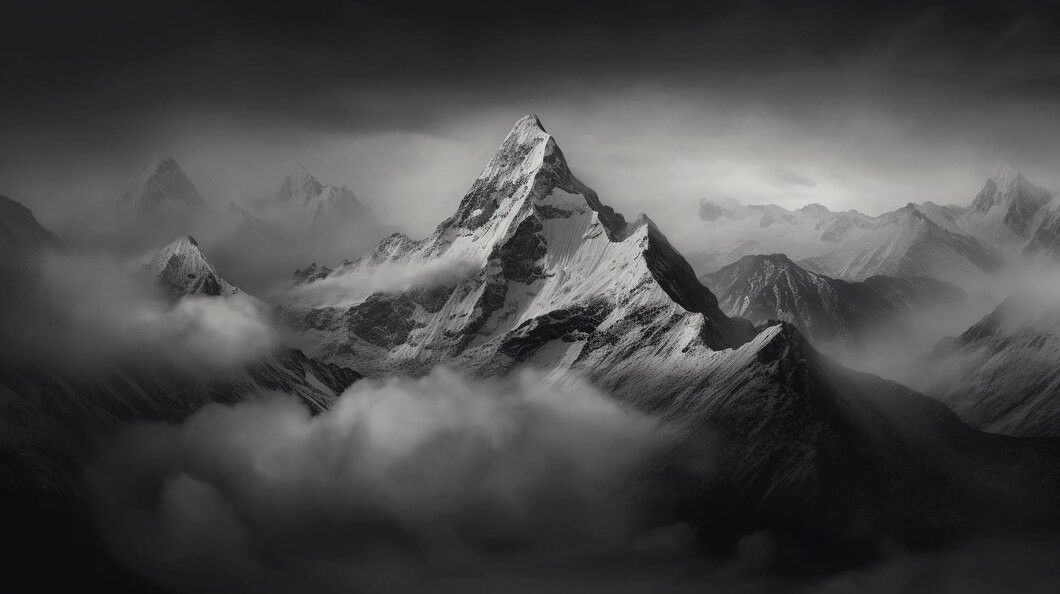
K2 Mountain stands as one of Earth’s most formidable and fascinating peaks, earning its reputation as the most dangerous mountain to climb among the world’s highest summits. Standing at 8,611 meters (28,251 feet) above sea level, this magnificent giant holds countless secrets that continue to captivate mountaineers, geologists, and adventure enthusiasts worldwide.

The Savage Mountain’s Origins and Location
The Story Behind K2’s Name
Unlike most famous peaks, K2 doesn’t have a traditional local name, which makes it unique among the world’s highest mountains. The mountain received its designation from British surveyor Thomas Montgomerie in 1856, who labeled it as part of the Great Trigonometrical Survey of India. The ‘K’ stands for Karakoram, the mountain range where it’s located, while the ‘2’ indicates it was the second peak surveyed in that region. This systematic naming convention also created K1, K3, K4, and K5, though K2 is the only one that retained its survey designation rather than adopting a local name.
Geographic Marvel on Two Nations
K2 straddles the border between Pakistan and China, specifically positioned in Pakistan’s Gilgit-Baltistan region and China’s Xinjiang province. This strategic location places it in the heart of the Karakoram Range, one of Earth’s most dramatic mountain systems. The mountain’s base primarily lies within Pakistani territory, though a smaller portion extends into China, creating an international mountaineering destination.
Geological Wonder: A Perfect Pyramid
Ancient Rock Formation
K2 represents a geological masterpiece, formed from gneissic rock that creates a gigantic isolated pyramid rising approximately 3,600 meters above its base. The mountain’s structure consists of grey and greenish, rather massive gneiss, often including augen gneiss (K2 gneiss) associated with granite gneiss. This ancient rock formation has been shaped by millions of years of tectonic activity and glacial erosion, creating the distinctive pyramid shape that makes K2 instantly recognizable.
Six-Faced Mountain Structure
Unlike many peaks that appear different from various angles, K2 maintains its pyramid shape with six distinct faces: north-northeast, east, south-southeast, south-southwest, west, and north-northwest. The ridges are well-defined from the crest down to approximately 7,500 meters, below which they branch into numerous spurs, increasing the number of faces toward the base. This geometric perfection contributes to K2’s reputation as one of the most beautiful mountains on Earth.
The Numbers That Tell K2’s Story
Height and Ranking Statistics
Standing at 8,611 meters (28,251 feet), K2 claims the title of world’s second-highest mountain, trailing only Mount Everest by 237 meters. However, this relatively small height difference doesn’t diminish K2’s significance in the mountaineering world. The mountain belongs to the exclusive group of fourteen peaks above 8,000 meters, known as the “eight-thousanders”.
Climbing Statistics and Records
The numbers surrounding K2 climbs reveal the mountain’s formidable nature. As of August 2023, approximately 800 people have successfully summited K2, with 96 deaths during attempted climbs. This creates a death rate of approximately 12%, though historically it reached as high as 22%. To put this in perspective, for every four people who reach the summit, approximately one person dies trying.
Recent years have seen dramatic increases in summit attempts. In 2022, 145 summits were recorded in a single day on July 22, establishing a new record for the highest number of daily summits. The 2022 season also achieved a seasonal record of 200 summits, surpassing the previous record of 62 summits set in 2018.
The Savage Mountain’s Deadly Reputation
Why K2 Earned Its Fearsome Nickname
K2’s moniker “Savage Mountain” originated from American climber George Bell’s 1953 expedition, when he declared, “It’s a savage mountain that tries to kill you”. This description perfectly captures the mountain’s unforgiving nature and the numerous hazards that challenge even the most experienced mountaineers. The name has endured because it accurately reflects the mountain’s propensity to create life-threatening situations through unpredictable weather, technical difficulties, and objective dangers.
Alternative Names and Cultural Significance
Beyond “Savage Mountain,” K2 carries several other dramatic appellations. It’s known as “The King of Mountains,” “The Mountaineers’ Mountain,” and “The Mountain of Mountains”. Italian climber Reinhold Messner popularized the latter phrase in his book about K2, emphasizing the technical challenges that make it the ultimate test for serious mountaineers. Some sources also refer to it as Mount Godwin-Austen, named after British surveyor Henry Haversham Godwin-Austen.
The Treacherous Bottleneck: K2’s Most Dangerous Section
Anatomy of the Death Trap
The Bottleneck represents the most dangerous section of K2, located at approximately 8,200 meters (26,900 feet) just 400 meters below the summit. This narrow couloir features a steep incline of 50 to 60 degrees and stretches about 100 meters, requiring climbers to traverse directly beneath massive overhanging seracs. The combination of extreme altitude, technical difficulty, and objective danger makes this section the site of 13 out of the last 14 fatalities on K2.
The 2008 K2 Disaster
The Bottleneck’s deadly reputation was cemented during the 2008 K2 disaster, when 11 climbers perished in one of mountaineering’s darkest days. An ice avalanche destroyed many rope lines, trapping climbers and creating a cascade of fatal incidents. This tragedy highlighted the section’s vulnerability to serac collapses, which can occur without warning and send massive ice chunks onto climbers below.
Weather Extremes and Climbing Conditions
Death Zone Weather Patterns
K2’s position in the northern Karakoram Range subjects it to more severe weather conditions than many other peaks, contributing significantly to its dangerous reputation. Research shows that winter temperatures on K2 can reach -40°C, while winds can exceed 36 meters per second. The mountain’s northern latitude, approximately 8 degrees further north than Everest, creates harsher conditions than might be expected from the altitude difference alone.
Climbing Season Limitations
Unlike Everest, which has spring and autumn climbing windows, K2’s climbing season is restricted primarily to July and August, the warmest months in the region. Even during this optimal period, weather conditions remain extremely unpredictable and can change rapidly, with high winds, heavy snowfall, and severe cold temperatures common. This narrow climbing window concentrates summit attempts into just a few weeks, contributing to the crowding and increased risks observed in recent years.
Historic Winter Achievement: The 2021 Breakthrough
Breaking the Last Great Mountaineering Barrier
January 16, 2021, marked a historic moment in mountaineering when a team of 10 Nepali climbers achieved the first winter ascent of K2, completing what many considered the sport’s last great challenge. Led by Nirmal Purja and including climbers like Mingma Gyalje Sherpa, this achievement represented decades of failed attempts dating back to 1987-1988.
The Team Behind the Historic Achievement
The successful winter team included Nirmal Purja, Mingma David Sherpa, Mingma Tenzi Sherpa, Geljen Sherpa, Pem Chiri Sherpa, Dawa Temba Sherpa, Kilu Pemba Sherpa, Dawa Tenjin Sherpa, and Sona Sherpa. These climbers, initially spread across competing teams, united to claim the historic achievement in Nepal’s name, highlighting the collaborative spirit that made this impossible dream achievable.

Modern Climbing Routes and Technical Challenges
The Abruzzi Spur: The Classic Route
The Abruzzi Spur remains the most popular route to K2’s summit, established during the first successful ascent in 1954. This southeast ridge provides the most direct path but requires climbers to navigate the infamous Bottleneck. The route involves multiple camps: Base Camp at 4,900-5,150 meters, Camp I at 6,100 meters, Camp II at 6,700 meters, Camp III at 7,200 meters, and Camp IV at 7,950 meters.
Alternative Routes and Technical Variations
While the Abruzzi Spur dominates summit attempts, K2 has been climbed via almost all of its ridges, including various technical routes that avoid some of the Bottleneck’s dangers. However, K2’s eastern face remains unclimbed, partly due to the instability of its ice and snow formations. This represents one of the remaining challenges for future generations of elite climbers.
Recent Records and Notable Achievements
Youth and Gender Milestones
K2 continues to witness remarkable individual achievements. In 2022, Adriana Brownlee became the youngest woman to climb K2 at age 21, demonstrating that the mountain attracts climbers across all demographics. In 2019, Anja Blacha became the first German woman to summit K2 without supplemental oxygen, showcasing the evolving standards in high-altitude climbing.
Speed Records and Multi-Peak Achievements
In 2023, Norwegian mountaineer Kristin Harila and Nepali guide Tenjen Sherpa set a remarkable record by completing all 14 eight-thousanders in just 92 days, with their K2 summit on July 27 being a crucial component. This achievement highlighted both the technical expertise required for K2 and the logistical mastery needed for rapid high-altitude climbing.
The Science Behind K2’s Dangers
Physiological Challenges Above 8,000 Meters
Climbing K2 involves extended time in the “death zone” above 8,000 meters, where oxygen levels drop to approximately one-third of sea level. At K2’s summit, atmospheric pressure reaches critical lows, making every physical and mental task exponentially more difficult. The combination of altitude, extreme cold, and technical climbing creates a perfect storm of physiological stress.
Objective Dangers and Environmental Hazards
Beyond altitude, K2 presents numerous objective dangers that climbers cannot control. Serac collapses, avalanches, and rockfall occur unpredictably, particularly in areas like the Bottleneck. The mountain’s steep faces and unstable ice formations create a constantly changing environment where yesterday’s safe passage may become today’s death trap.
K2’s Role in Mountaineering Culture
The Ultimate Test for Elite Climbers
K2 occupies a unique position in mountaineering culture as the ultimate technical challenge among the world’s highest peaks. While Everest attracts climbers of all skill levels, K2 remains primarily the domain of elite mountaineers. This exclusivity stems not from artificial barriers but from the mountain’s uncompromising technical demands and high objective dangers.
Economic and Cultural Impact
The mountain significantly impacts the local economy in Pakistan’s Gilgit-Baltistan region, where base camp operations and expedition support provide crucial income for local communities. The growing number of expeditions has created opportunities while also raising concerns about environmental impact and safety management.
Conservation and Future Challenges
Environmental Considerations
As climbing popularity increases, K2 faces growing environmental pressures. The record-breaking 145 summits in a single day during 2022 raised questions about sustainable climbing practices and environmental protection. Climate change also affects the mountain’s ice formations and weather patterns, potentially altering traditional climbing routes and safety considerations.
Technological Advances and Safety Improvements
Modern technology continues to improve climbing safety on K2. Advanced weather forecasting, satellite communications, and improved gear have reduced some risks, though the mountain’s fundamental dangers remain unchanged. The balance between technological assistance and maintaining climbing’s adventurous spirit continues to evolve.
The Enduring Appeal of the Savage Mountain
K2’s collection of fun facts reveals why this magnificent peak continues to captivate the mountaineering world. From its perfect pyramidal shape formed by ancient geological processes to its modern role as the ultimate climbing challenge, K2 represents the pinnacle of mountaineering achievement. The mountain’s 22% historical fatality rate, its notorious Bottleneck section, and its resistance to winter climbing until 2021 all contribute to a legend that grows stronger with each passing season.
Whether you’re fascinated by the 10 Nepali climbers who made history in winter 2021 or intrigued by the geological forces that created its six-faced pyramid structure, K2 offers endless opportunities for discovery and admiration. This savage mountain continues to test human limits while rewarding those brave enough to accept its challenge with experiences found nowhere else on Earth.
For mountaineers and adventure enthusiasts worldwide, K2 remains the ultimate expression of what’s possible when human determination meets one of nature’s most formidable creations. Its fun facts tell a story of geological wonder, human achievement, and the eternal quest to push beyond perceived limitations.
Frequently Asked Questions About K2 Mountain
What is K2 and where is it located?
K2 is the world’s second-highest mountain at 8,611 meters (28,251 feet), located on the border between Pakistan and China in the Karakoram mountain range. It sits in Pakistan’s Gilgit-Baltistan region and China’s Xinjiang province.
Why is K2 called the “Savage Mountain”?
K2 earned this nickname from American climber George Bell during the 1953 expedition when he declared it “a savage mountain that tries to kill you”. The name reflects K2’s unforgiving nature, extreme weather conditions, and high fatality rate.
How dangerous is K2 compared to other mountains?
K2 has historically maintained approximately a 22% death rate, meaning for every four people who reach the summit, one person dies attempting the climb. 83 climbers have died on K2, with 33 fatalities occurring during descent from the summit.
How many people have successfully climbed K2?
As of recent counts, approximately 800 people have successfully summited K2, significantly fewer than Mount Everest’s approximately 6,800 summiteers. In 2022, a record 200 summits were achieved in a single season.
Has K2 been climbed in winter?
Yes, K2 was first climbed in winter on January 16, 2021, by a team of 10 Nepali climbers led by Nirmal Purja. This achievement completed the last remaining winter ascent among the fourteen 8,000-meter peaks.
How does K2 compare to Mount Everest in difficulty?
K2 is considered significantly harder and more dangerous than Everest due to steeper terrain, unpredictable weather, and greater objective dangers like rockfall and avalanches. K2 requires continuous steep climbing at 40-degree minimum angles, unlike Everest which has more moderate sections.
What is the K2 Bottleneck?
The Bottleneck is the most dangerous section of K2, located at approximately 8,200 meters just below the summit. It’s a narrow couloir where a huge ice cliff constantly drops pieces, making it extremely hazardous as falling ice is funneled through this passage.
Do climbers need supplemental oxygen on K2?
While it’s possible to summit without supplemental oxygen with years of training, approximately 95% or more climbers use supplemental oxygen on their K2 expeditions. Elite climbers occasionally attempt oxygen-free ascents as an additional challenge.
How long does a K2 expedition take?
K2 expeditions typically take up to 2 months, including trekking to and from base camp, acclimatization rotations, the actual climbing period, and gear cleanup after the adventure. The summit push itself usually involves 5-7 days from base camp to summit and back.
What’s the climbing season for K2?
K2’s climbing season is primarily restricted to July and August, the warmest months in the Karakoram region. Unlike Everest, which has spring and autumn climbing windows, K2’s harsh northern latitude limits climbing opportunities to this narrow summer period.
How cold does it get on K2?
Temperatures commonly reach around -20°F (-29°C) near the summit during climbing season, with even colder temperatures in the off-season. Winter temperatures can plummet to -40°C (-40°F) with winds exceeding 36 meters per second.
Where is K2 Base Camp and how high is it?
K2 Base Camp sits at approximately 16,000 feet (4,877 meters), slightly lower than Everest Base Camp. This elevation allows climbers to recover between acclimatization rotations while still maintaining important altitude adaptation.
Does K2 have snow year-round?
Yes, K2 has permanent glaciers and year-round snow coverage due to its extreme elevation and northern latitude. Even at base camp, ice and glacial formations remain present throughout the year, though snow may occasionally clear from tent areas during peak summer.
Are there other mountains named K1, K3, K4, etc.?
Yes, K1 is also known as Masherbrum and K3 is known as Gasherbrum IV. The “K” designation system was part of the Great Trigonometrical Survey, though K2 uniquely retained its survey name rather than adopting a local designation.
Who was the first person to climb K2?
An Italian expedition in 1954 achieved the first successful K2 ascent, led by climbers Achille Compagnoni and Lino Lacedelli. This historic achievement came after multiple failed attempts by various expeditions throughout the early-to-mid 20th century.
Do I need permits to visit K2 Base Camp?
Yes, you are required to hire a licensed guide and cannot enter the Baltoro region without proper permits. International visitors need a specific trekking visa for Pakistan, which differs from standard tourist visas. The nearest village to K2 Base Camp is Askole, approximately 100 kilometers away.