

Panspermia frames one possible origin path for life, biosignature detection provides the practical test, and the next decade will push both topics across exoplanets and icy moons through focused instruments and ambitious missions (from Europa Clipper and JUICE to Roman’s coronagraph). Because here’s the thing: confidence will come from context-rich measurements rather than one-off “gotcha” signals, stitched together by space- and ground-based assets working in concert.
Panspermia
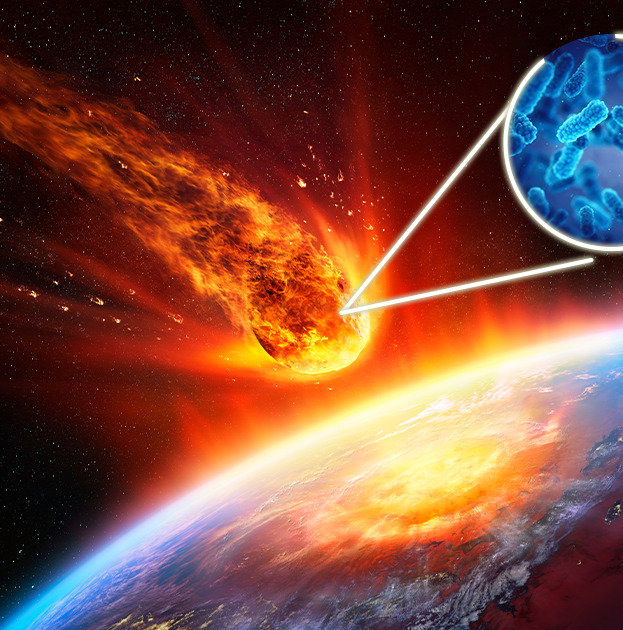
The panspermia hypothesis proposes that hardy microbes or prebiotic ingredients travel via meteoroids, comets, and dust, with variants like lithopanspermia, radiopanspermia, and directed panspermia—an idea with roots from Anaxagoras to Arrhenius and later advocates such as Hoyle and Wickramasinghe (a long, controversial lineage). Critics argue it shifts, rather than solves, abiogenesis by outsourcing the starting line, while “pseudo‑panspermia” (delivery of organics that feed chemistry rather than organisms) remains far more widely accepted in mainstream discussions. A useful frame, not dogma, and often a spur to test how survivable and mobile life’s building blocks can be in realistic astrophysical settings.
Biosignatures now
Oxygen and methane together, held in redox disequilibrium, remain a classic diagnostic—yet the field has learned to interrogate false positives and false negatives with ruthless thoroughness (stellar UV, photolysis, surface sinks). The message is simple, almost annoying in its caution: no single gas works alone without environmental context, spectra across multiple bands, and model cross‑checks to reject abiotic look‑alikes. JWST has proven exquisite for atmospheric chemistry yet reminds practitioners that rocky worlds are hard targets and parallel interpretations often persist until next‑gen observatories weigh in (which is fine, science is supposed to be stubborn).
Exoplanet tactics
Expect three complementary thrusts: JWST for the best available transmission spectra on select temperate candidates, Roman’s Coronagraph Instrument to demonstrate space‑based direct imaging and reflected‑light characterization of mature giants, and ELTs to chase biosignature lines via high‑contrast, medium/high‑resolution spectroscopy with cross‑correlation tricks. Roman is slated to launch no later than May 2027 with a months‑long technology demo, paving techniques and stability requirements that feed the future Habitable Worlds Observatory playbook (first things first, then the big swing). On the ground, ELT/METIS and HARMONI studies show pathfinding sensitivity to CH₄, O₂, H₂O, and CO₂ for nearby rocky systems, while JWST remains superior for transit cases like TRAPPIST‑1 where angles are tight and separations small.
Icy moons next
Europa Clipper, launched in 2024, will reach Jupiter in 2030 and execute nearly 50 Europa flybys to assess the ice shell, ocean, and habitability with a full instrument suite (fast passes, broad coverage, disciplined geophysics). ESA’s JUICE, launched in 2023, arrives in 2031 for a long tour culminating at Ganymede, giving a comparative ocean‑worlds angle that helps separate local quirks from general rules. Titan’s Dragonfly (launch planned for 2028, arrival 2034) targets complex organics in a lab‑friendly atmosphere, while the decadal survey elevates an Enceladus Orbilander concept to sample active plume material and then settle on the ice for life‑detection tests—bold, but methodical.
Here is a concise FAQ on panspermia, biosignatures, and near‑term life‑detection missions for exoplanets and icy moons. It highlights what each idea means, how signals can mislead, and which missions will test them this decade.
-
Panspermia? Life or its precursors could ride between worlds on meteoroids, comets, or dust, with variants like lithopanspermia and directed panspermia proposed across a long, debated history.
-
Is it mainstream? It shifts the origin question rather than solving abiogenesis, while “pseudo‑panspermia” (delivery of organics that seed chemistry) is generally seen as the more plausible pathway.
-
Biosignatures? Oxygen and methane in sustained redox disequilibrium are classic, but any claim needs environmental context and broadband spectra rather than reliance on a single gas.
-
False positives? Photochemistry, stellar UV fields, and geological sources can imitate biology, so strategies emphasize ruling out abiotic production routes before any life inference.
-
JWST’s role? Outstanding for transmission spectra and atmospheric chemistry, yet rocky planets remain hard targets and interpretations can remain parallel until next‑generation facilities contribute.
-
Roman CGI? A coronagraph technology demo slated by 2027 aims at direct imaging and reflected‑light spectroscopy of giant planets, maturing stability and contrast methods for future missions.
-
ELTs next? Extremely large telescopes will pursue nearby rocky worlds using high‑contrast, medium/high‑resolution spectroscopy and cross‑correlation to tease out faint molecular lines.
-
Europa Clipper? Reaching Jupiter in 2030, it will conduct nearly 50 flybys of Europa to map ice structure, probe the ocean’s prospects, and assess overall habitability with a broad instrument suite.
-
JUICE timing? ESA’s mission arrives in 2031 and culminates in Ganymede orbit, enabling comparative ocean‑world science across Europa, Ganymede, and Callisto over an extended tour.
-
Dragonfly plan? Launching in 2028 for a 2034 arrival, the Titan rotorcraft will traverse multiple sites to analyze complex organics and prebiotic chemistry in a uniquely accessible atmosphere.
-
Enceladus Orbilander? The 2022 decadal survey prioritized a mission concept to sample active plumes from orbit, then land for focused life‑detection tests on the ice.
-
Big picture? Confidence will flow from converging evidence—context‑rich spectra for exoplanets and in‑situ chemistry/geophysics on ocean worlds—rather than single “smoking gun” signals.
Used links:
https://pmc.ncbi.nlm.nih.gov/articles/PMC6014580/
https://juice.stp.isas.jaxa.jp/schedule_en/
https://www.cosmos.esa.int/web/juice/mission-calendar